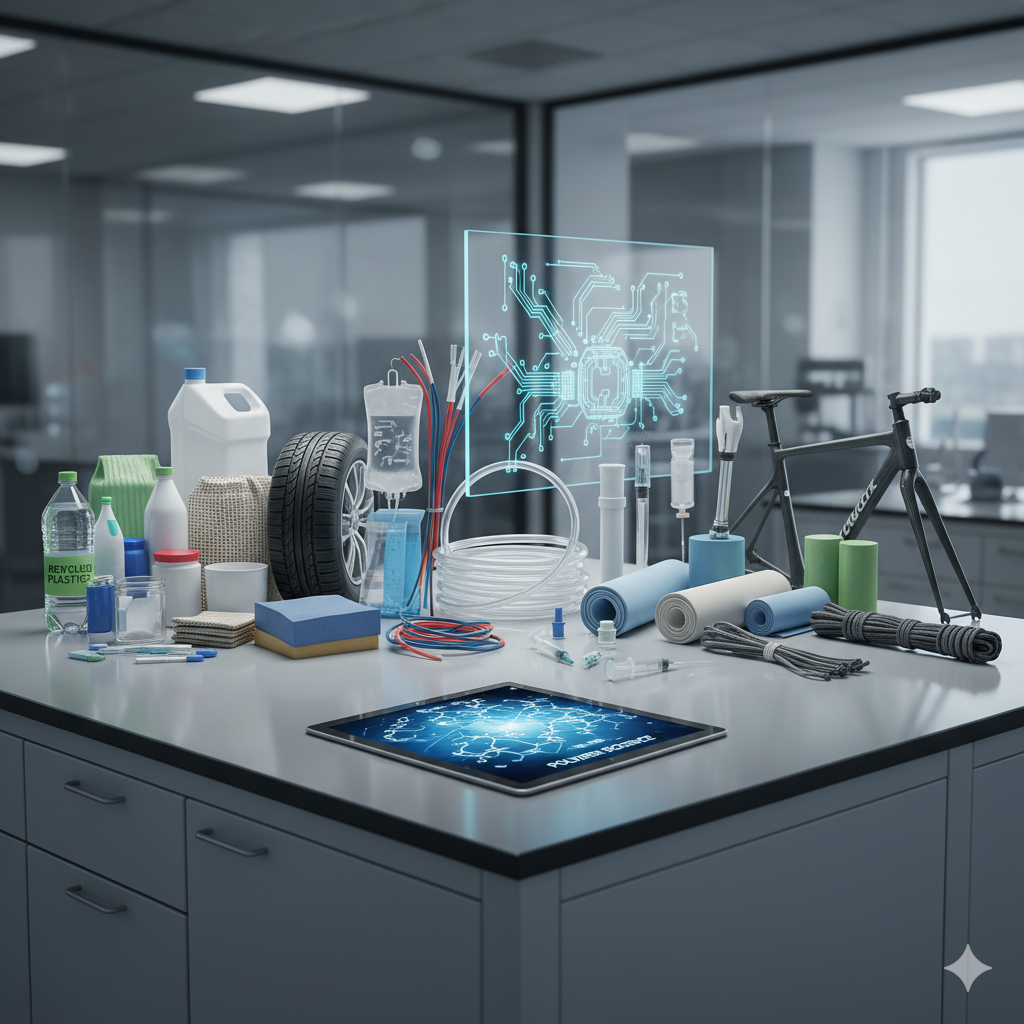
Polymers are macromolecules composed of long chains of repeating structural units called monomers. Their immense versatility arises from the ability to tune their chemical composition, molecular weight, and architecture. Traditionally categorized into natural polymers (like DNA, proteins, and cellulose) and synthetic polymers (such as plastics, fibers, and rubbers), these materials have become the structural backbone of modern civilization.
Traditional and Industrial Applications
In everyday life, polymers like polyethylene (PE) and polypropylene (PP) dominate the packaging industry due to their lightweight and durable nature. The construction sector relies heavily on polyvinyl chloride (PVC) for piping and polyurethanes for insulation. In the automotive and aerospace industries, high-performance polymers and carbon-fiber-reinforced composites are replacing metals to reduce vehicle weight, thereby significantly enhancing fuel efficiency and reducing carbon emissions.
Medical and Electronic Innovations
The medical field has been revolutionized by biocompatible polymers. Synthetic hydrogels are used for contact lenses and wound healing, while biodegradable polymers act as scaffolds for tissue engineering and "smart" drug-delivery systems that release medication in response to internal stimuli. In electronics, conductive polymers like PEDOT:PSS are enabling the transition toward flexible, wearable technology, including foldable OLED screens and organic solar cells.
Sustainability and the Future
As global focus shifts toward environmental stewardship, polymer science is evolving toward a circular economy. This involves the development of bio-based plastics (such as PLA and PHA) derived from renewable resources and the advancement of chemical recycling technologies that break plastic waste down into its original monomers.
Looking ahead, "smart" polymers—materials that can self-heal or change shape in response to heat or light—are driving innovations in 4D printing and soft robotics. Ultimately, polymers remain indispensable, transitioning from simple structural materials to intelligent, sustainable solutions for 21st-century challenges.INTRODUCTORY VIDEO ON MY MOOC
- Teacher: Admin User